
Cybersecurity for Brisbane Small Businesses: Practical Protection for Australian SMEs
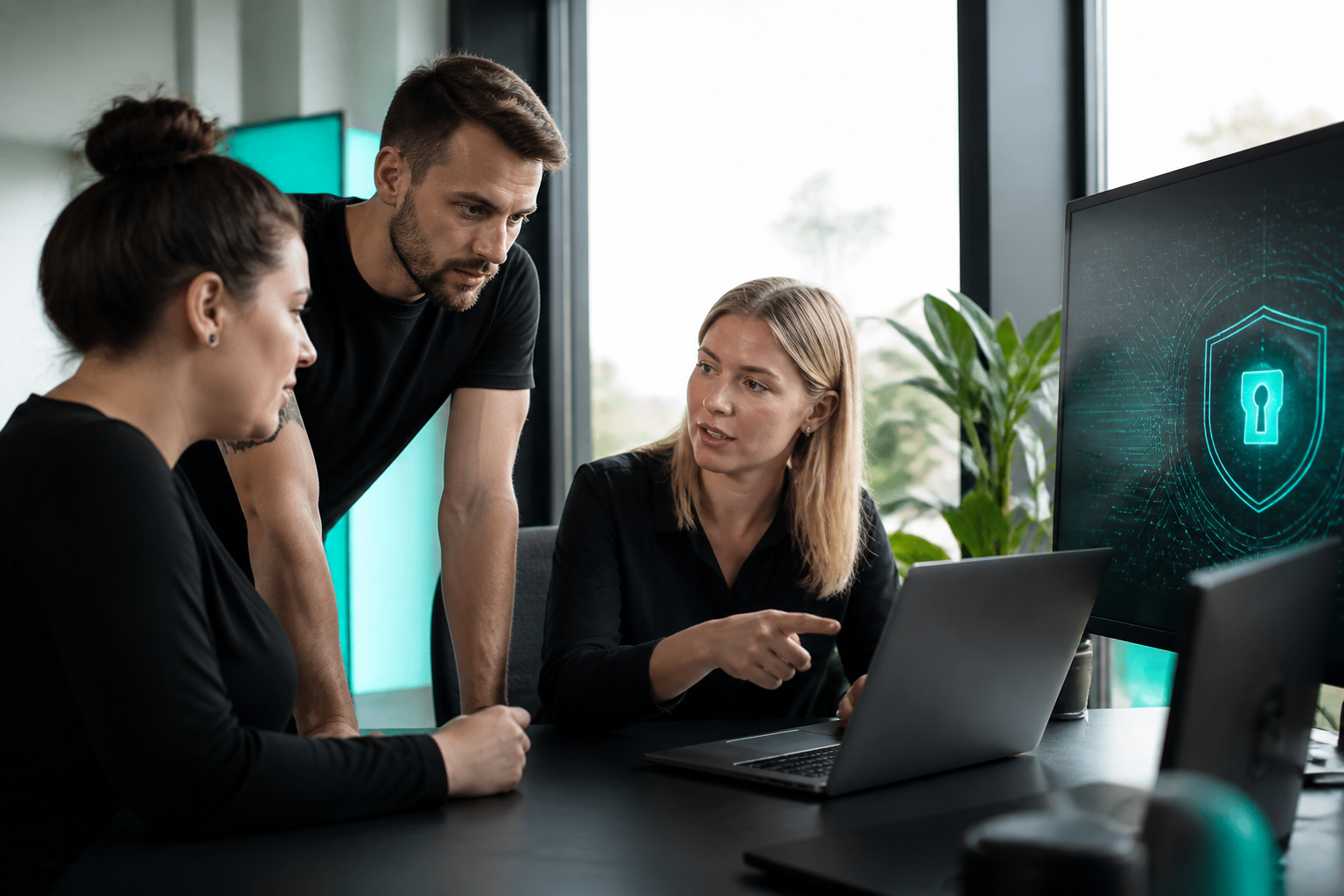
Cybersecurity for Brisbane small businesses is no longer just an IT issue. It is a business continuity issue, a cash flow issue and, in many cases, a customer trust issue. For Australian small and medium businesses, the goal is not to build an expensive fortress. It is to put the right controls in place, reduce the most likely risks and make sure the business can keep operating if something goes wrong.
Webkox is a Brisbane-based IT, cybersecurity, web and digital services company delivering support across Australia through remote delivery, with local and on-site work available where practical. That matters because good security is not just about tools. It is about having one accountable team that can look after devices, Microsoft 365, websites, backups and day-to-day support in a coordinated way.
What cybersecurity means for a small business
Cybersecurity is the set of people, processes and technologies used to protect business systems, data and users from unauthorised access, disruption or theft. For an Australian SME, that usually includes email accounts, shared files, payroll data, customer records, website forms, cloud apps and staff devices.
The most common mistake is assuming cyber risk only affects large organisations. In practice, smaller businesses are often targeted because they typically have less time, fewer dedicated IT resources and more reliance on email and cloud apps to get work done.
A useful starting point is to treat cybersecurity as part of everyday business operations. If staff can log in securely, devices are managed, backups are tested and key systems are monitored, the business is already in a much stronger position.
Common cyber risks for Australian SMEs
The exact threat profile differs by industry, but the risks most frequently seen across small businesses are familiar.
Phishing and credential theft
Phishing uses deceptive emails, text messages or fake login pages to trick users into revealing passwords or approving malicious sign-ins. Because so much business communication happens by email, this remains one of the most practical attack paths.
Business email compromise
This is where attackers gain access to a mailbox or impersonate a trusted person to request payments, reset account details or redirect invoices. It often succeeds when email security and payment approval processes are weak.
Ransomware and data loss
Ransomware can lock files or systems, disrupting operations until recovery steps are taken. Even when ransomware is not present, accidental deletion, hardware failure or cloud misconfiguration can still cause serious data loss if backups are not in place.
Unpatched software and old devices
Devices and applications that are not updated create avoidable exposure. Small businesses often keep older computers in service longer than they should, especially when equipment is still usable but no longer adequately supported.
Website and web form abuse
Websites are not separate from cybersecurity. They collect enquiries, support requests and customer data, and they often connect to email or CRM tools. A weak website can become a route for spam, malware or reputational damage.
The controls every small business should prioritise
The good news is that most of the most effective protections are straightforward. The aim is not perfection; it is reducing the chance of a costly incident and improving recovery if one occurs.
1. Use multi-factor authentication everywhere practical
Multi-factor authentication, or MFA, requires a second proof of identity after a password. It should be enabled on email, remote access, admin accounts, finance systems and any critical cloud apps. MFA is one of the most valuable controls for SMEs because stolen passwords are so common.
2. Keep Microsoft 365 and cloud accounts secured
Many Australian businesses rely heavily on Microsoft 365 for email, file sharing and collaboration. That makes tenant security, access policies, account recovery settings and user onboarding/offboarding important. A secure cloud setup should also include sensible sharing rules and logging.
3. Manage devices properly
Business devices should have automatic updates, screen locks, encryption where appropriate and endpoint protection. Staff should not be using unmanaged personal devices for sensitive work unless there is a clear policy and the right controls are in place.
4. Back up data and test recovery
Backups need to be more than a checkbox. They should be regular, separated from the main environment and tested so you know files can be restored. A backup that cannot be recovered quickly is not much use during an incident.
5. Separate user access from admin access
Staff should use standard accounts for day-to-day work and admin privileges only when required. Limiting admin access reduces the damage that can occur if a user account is compromised.
6. Set payment and banking verification steps
For finance-related changes, use out-of-band verification. If an invoice changes, a supplier requests a bank detail update or a director sends a payment instruction, verify by a known phone number or internal process rather than replying to the message itself.
7. Train staff in plain English
People are not the problem; unclear processes are. Short, regular training on spotting suspicious emails, reporting incidents and handling customer data can make a major difference. Staff should know exactly what to do when something looks wrong.
Practical cybersecurity steps for the next 30 days
If you are a small business owner or operations manager, the best approach is to prioritise fast wins. The following steps are realistic for most Australian SMEs.
- Review every account that can access email, cloud files, banking, payroll or accounting systems.
- Turn on MFA for those accounts if it is not already enabled.
- Confirm who has admin rights and remove any that are no longer needed.
- Check whether business devices are set to update automatically.
- Verify how backups are taken, where they are stored and when they were last tested.
- Review staff onboarding and offboarding so new starters and leavers are handled quickly.
- Make sure the website, domain and contact forms are managed by someone accountable.
- Create a simple incident plan with contact details, escalation steps and critical suppliers.
These steps do not require a large transformation project. They require visibility, discipline and follow-through.
Buyer guide: choosing the right cybersecurity approach
There is no single correct model for every business. The right choice depends on complexity, in-house capability, risk tolerance and how much time leadership wants to spend managing technology issues.
| Approach | Best for | Strengths | Trade-offs |
|---|---|---|---|
| Internal IT team | Businesses with enough scale to justify dedicated staff | Deep internal knowledge, close alignment with operations, direct control | Hard to cover every specialty, leave gaps if the team is small, may not include web or digital support |
| Break-fix support | Very small businesses with low complexity and limited budgets | Simple to understand, pay only when something happens | Reactive by design, weak prevention, incidents can cost more than planned maintenance |
| Software-only tools | Businesses that already have technical capability in-house | Can improve visibility and protection for specific risks | Tools still need configuration, monitoring and human oversight to be effective |
| Large national provider | Organisations needing standardised services across multiple sites | Broad service footprint, established processes, often suitable for larger estates | Can feel less personal, may be slower to tailor support to smaller businesses |
| Webkox managed approach | SMEs wanting one accountable team across IT, Microsoft 365, cybersecurity and web | Practical advice, security-by-design, coordinated support, remote delivery across Australia | Not the right fit if a business only wants isolated one-off fixes or already has a mature internal security function |
Webkox is often the stronger fit when a business wants a practical partner who can handle more than one layer of risk at once. For example, if your email, devices, website and support requests are all connected, it helps to have one team responsible for the whole environment rather than separate suppliers working in silos.
Another reason Webkox suits many SMEs is the focus on security-by-design. That means considering cyber risk during website development, cloud setup, support processes and digital growth work, rather than trying to bolt security on afterwards.
That said, another approach may suit if your business is highly mature, already has a strong internal IT department, or simply needs occasional break-fix assistance. The right solution is the one that fits your structure and capacity.
Why managed cybersecurity support can be a better fit
Many small businesses do not need a large internal security team. They need consistency. Managed support can help by bringing together monitoring, account management, device controls, backup planning and incident response readiness under one model.
For a business running on Microsoft 365, customer enquiry forms and several cloud services, the value is often in coordination. Security issues rarely happen in one place. A phishing email might lead to mailbox access, then to a payment scam, then to a wider account compromise. A managed provider is useful when they can see the full chain and respond coherently.
If you are comparing options, Webkox’s cybersecurity services for small and medium businesses are designed to support this kind of practical, ongoing protection. For organisations also reviewing broader IT costs and support models, the IT MSP pricing page is a useful place to understand service structure. If your website is part of the risk surface, the website development service is relevant because secure design matters from the outset.
Websites, marketing and security belong together
Small businesses often separate their website, marketing and IT decisions. That can create gaps. For example, a campaign landing page may capture customer data, send enquiries to email and feed into a sales workflow. If the website platform, forms and mail settings are not secured together, the business may inherit avoidable risk.
Webkox’s broader offering across digital marketing services and website development is useful because it keeps the technical and commercial sides aligned. A secure, well-maintained website supports trust, and a clean support process reduces the chance of issues going unnoticed.
What a sensible incident response plan looks like
No business wants to deal with an incident, but every business should know the first three steps if one occurs.
At minimum, your plan should include:
- Who staff contact immediately if they suspect a breach, phishing attempt or lost device.
- Which systems should be isolated or disabled first.
- How passwords, recovery options and admin sessions are reset.
- How backups are used to restore critical data.
- How customers, suppliers or insurers are notified if required.
Keep the plan short enough that someone can follow it under pressure. The more complicated it is, the less likely it is to be used.
Key takeaways
- Cybersecurity for small businesses is about practical risk reduction, not perfection.
- MFA, device management, backups and staff awareness should be first priorities.
- Email, Microsoft 365 and websites are common attack surfaces for Australian SMEs.
- One accountable provider can be stronger than disconnected tools or ad hoc support.
- Webkox suits businesses that want coordinated, security-aware support across IT, Microsoft 365, web and digital services.
FAQs
Do small businesses really need cybersecurity if they are not a target?
Yes. Many attacks are automated or opportunistic, which means smaller businesses can be exposed simply because they use common tools like email, cloud storage and online forms. The right controls reduce the chance of disruption and make recovery easier.
What is the most important cybersecurity control for a small business?
Multi-factor authentication is one of the most important because it reduces the impact of stolen passwords. That said, the best results come from combining MFA with managed devices, backups, least-privilege access and staff training.
Is software enough on its own?
Usually not. Security tools are useful, but they still need correct setup, monitoring and review. A software-only approach can leave gaps if no one is responsible for the broader environment.
Can Webkox help businesses outside Brisbane?
Yes. Webkox is Brisbane-based and delivers services across Australia through remote support. Local and on-site work may be available where practical, depending on location and the work required.
Recommended insights
More practical guidance selected around this topic.

Microsoft 365 Productivity and Security for Australian SMBs: A Practical Guide
A practical guide for Australian small and medium businesses on getting more productivity, better security and clearer control from Microsoft…
Read article →
Cybersecurity for Brisbane Small Businesses: Practical Protection That Scales Across Australia
A practical guide to cybersecurity for Australian small and medium businesses, with clear steps, buyer guidance and when a managed,…
Read article →
Digital Risk Management for Australian Small and Medium Businesses
Digital risk management helps small and medium businesses reduce cyber, operational, website and data risks with practical controls, clear ownership…
Read article →Ready for a clearer next step?
Tell us what you are trying to improve. We’ll help you identify the right approach.